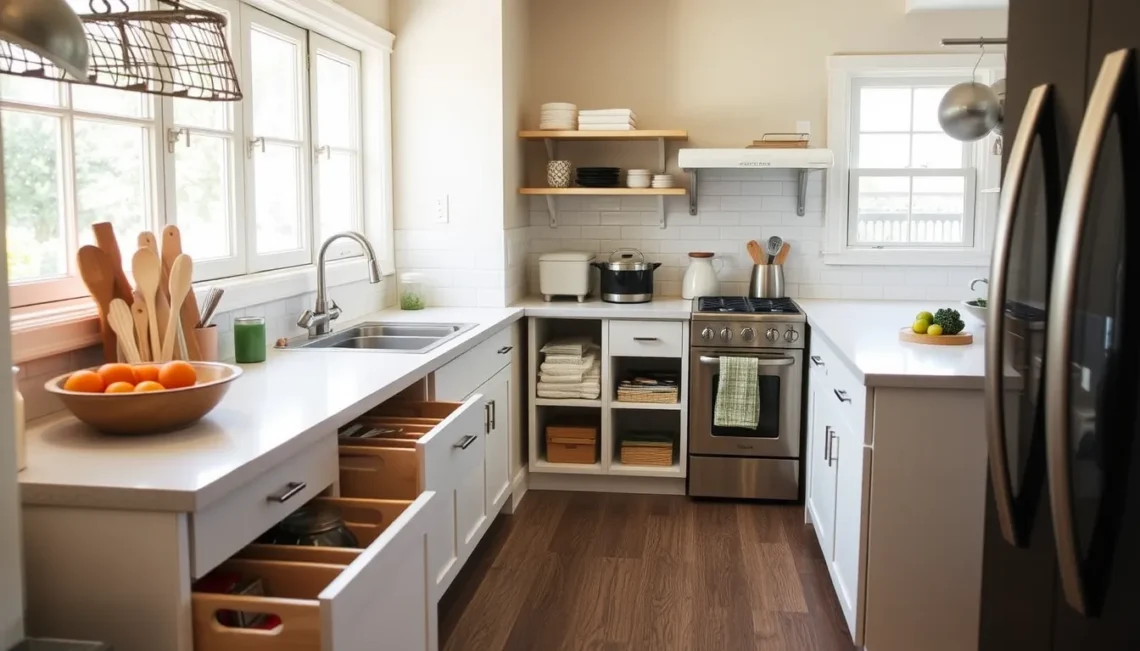
If you are working with limited square footage, traditional storage hacks often fail because they ignore how you actually cook. This guide focuses on spatial logic and workflow optimization to remove daily friction. You will learn to map your movement patterns and eliminate unnecessary steps, creating a functional small kitchen that supports smooth cooking and cleaning workflows.
This approach prioritizes practical efficiency over aesthetic decluttering. By understanding your specific routines, you can arrange items where they are used, not just where they fit. The result is a clutter-free space that feels larger and significantly more usable every single day.
The Core Principle: Workflow Over Storage
When you ask yourself how to organize a small kitchen efficiently, the first answer is to map the three most frequent destinations: sink, stove, and refrigerator. This trio forms the classic work triangle. The shorter the sides of that triangle, the fewer steps you take while cooking, washing, or storing food. In a compact layout, even a foot of extra walking can feel like a major obstacle.
Instead of cramming every empty cubic inch with dishes or gadgets, evaluate each item against the triangle. A pot you use daily belongs as close to the stove as possible; a cutting board should sit near the sink; frequently opened pantry items belong within easy reach of the refrigerator. By positioning tools where the action happens, you turn the triangle into a workflow highway rather than a storage challenge.
Efficiency also depends on habit. If you always return a spoon to the same drawer after stirring, the drawer becomes a predictable zone. Over time, these micro‑routines reduce the mental load of searching for items, turning organization into a living system instead of a one‑off tidy‑up.
In practice, start each day by noting the three steps you repeat most often. Adjust the placement of utensils, spices, or small appliances until those steps require no more than a short reach. The result is a kitchen that moves with you, not against you.
Audit and Declutter: The Foundation of Space
Before adding new storage solutions, you must reduce the volume of items competing for space. A small kitchen cannot support redundancy. If you own three can openers, keep only the one that fits your grip best. The others become obstacles. Similarly, a blender used once a month for a special recipe does not belong on the counter or in a prime cabinet spot. It belongs elsewhere in the home.
Start by emptying every cabinet, drawer, and surface. Place all items on the floor or a large table. This visual reset reveals the true scale of your inventory. Now, sort everything into three distinct categories: keep, relocate, and discard. The “keep” pile should contain only daily essentials and frequently used tools. If you hesitate, it likely goes to “relocate” or “discard.”
Be ruthless with the “discard” pile. Broken tools, duplicate gadgets, and expired seasonings release valuable space immediately. For the “relocate” pile, identify items you use less than once a week. Store these in a closet, garage, or another room. When you need them, bringing them into the kitchen intentionally is better than having them clutter the workspace permanently. This process ensures that every item remaining in the kitchen has a clear, justified reason to be there. It transforms decluttering from a temporary cleanup into a structural improvement of your workspace.
Optimizing Vertical Space and Cabinet Interiors
Once the unnecessary items are gone, focus on maximizing what remains. Small kitchens suffer most from wasted vertical space and inaccessible cabinet depths. Treat height as a primary resource, not an afterthought. Install door-mounted racks on cabinet doors to hold spices or utensils, keeping them visible and within arm’s reach. Add overhead shelving above appliances or along open wall sections to store items used regularly but not constantly, such as serving dishes or small appliances.
Inside cabinets, reorganize for accessibility. Standard shelves often hide the back row, creating friction during cooking. Install lazy Susans in corner cabinets to rotate items into view. Use adjustable dividers to create custom compartments for pots, pans, and baking sheets, preventing items from shifting and stacking in ways that make retrieval difficult. Stackable bins are ideal for grouping similar items, like plastic containers or baking tools. Label them if necessary, but the primary goal is to ensure you can see what is inside without emptying the bin.
Apply zone-based organization based on frequency of use. The area between waist and shoulder height is your golden zone. Reserve this prime vertical space for your most frequent tools: mixing bowls, primary cookware, and daily-use utensils. Store infrequent items, such as holiday decorations or rarely used gadgets, in upper cabinets or lower drawers near the floor. This spatial logic reduces the physical effort required for daily tasks. By aligning storage height with usage frequency, you streamline your workflow. You stop wasting energy reaching up or bending down for essential items, allowing your small kitchen to function smoothly despite its limited footprint.
Reclaiming Counter Space for Function
Clear counter space is not an aesthetic choice; it is a functional necessity. In a small kitchen, every inch of horizontal surface determines your ability to chop, mix, and plate food simultaneously. When counters are cluttered with appliances or random items, you create friction. You end up shifting plates to make room, which slows down cooking and increases the risk of spills or accidents. Treat your counters as temporary work zones, not permanent display areas. If an item does not serve an immediate culinary purpose, it belongs in storage.
Managing small appliances is critical to maintaining this workflow. Instead of leaving a toaster or coffee maker on the counter when not in use, assign them specific homes. Consider installing a dedicated charging station on the wall for corded devices like kettles or blenders. This keeps cords organized and frees up surface area. Alternatively, use a designated drawer with a custom insert to store smaller gadgets like can openers or peeling tools. For larger items, a wall-mounted rack for pots or a shelf for mugs can help, but prioritize items you use daily. If you only use the stand mixer once a week, keep it boxed in a high cabinet. If you drink coffee every morning, the machine needs easy access.
Placement matters just as much as storage. Position frequently used items within the primary reach range of your work triangle. The coffee maker should be near the sink and stove, not tucked in a corner. This minimizes the steps required to start your morning routine. By strategically locating these tools, you reduce unnecessary movement. A clear counter allows for smooth transitions between prep, cooking, and cleaning. It transforms the room from a cramped storage unit into an efficient workspace. Remember, the goal is to remove barriers between you and your food.
Maintaining Efficiency with Simple Habits
A well-organized kitchen degrades without consistent maintenance. To prevent the return of clutter, adopt a strict one in, one out rule. Before purchasing a new gadget or container, identify an existing item that serves a similar function and donate or discard it. This ensures your storage capacity remains aligned with your actual usage, preventing the slow accumulation of redundant tools.
Consistency is key to preserving your zone-based organization. Implement a weekly ten-minute reset routine. During this brief period, return stray utensils to their assigned drawers, wipe down surfaces, and verify that items in the work triangle are in their proper places. This quick habit prevents minor disarray from compounding into a chaotic environment that hinders daily cooking. It reinforces the spatial logic you established during the initial setup.
Your kitchen needs are not static. Adjust your system as your habits shift. Seasonal changes often dictate different cooking patterns. If you bake more in winter, move baking sheets and mixing bowls to prime vertical storage locations near the oven. Conversely, if you prepare more salads in summer, keep salad servers and storage containers within easy reach of the sink and counter space. Regularly reassess which zones are most active. If a specific area becomes congested, shift less-used items to less accessible spots. This flexibility ensures the workflow remains smooth, adapting to your lifestyle rather than fighting against it.